
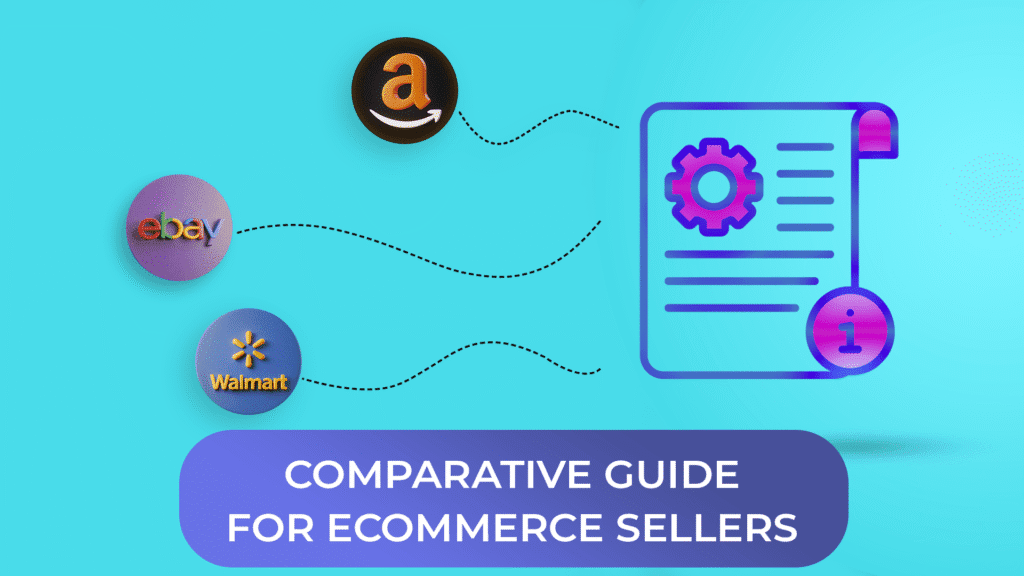
Amazon, Walmart & eBay Comparative Top 10 Guide for eCommerce Sellers.
In this fast changing, highly competitive online market Amazon Ads, making the right selection of an eCommerce platform is not merely a question of convenience or choice it’s now a core strategic support that determines the future direction of your online business.
At its core, no matter if you’re starting a new brand, expanding your channels of sales with Rootamz, or growing an existing business, the platform that you choose serves as a cornerstone to determining your visibility, reach to customers, buyer satisfaction, operational effectiveness & ultimately, your bottom line.
Boost Your Amazon Sales Through Amazon Ads
Each of the top eCommerce platforms Amazon, Walmart & eBay has its separate ecosystem, with distinct workflows, algorithmic patterns, fee models & fulfillment methods. Getting the wrong one or not optimising on multiple channels can stifle your growth, drain capital & harm your brand.
By contrast, the right platform or combination of multiple channels can be a game changer, turbocharging brand momentum, boosting operating leverage & opening up new customer bases previously inaccessible.
Though essentials such as product quality, brand & service excellence are never negotiable across any platform, your marketplace choice is the key that links your product offering with your target audience & Amazon ads.
The reality is that there is no single “best” platform. What is a masterpiece for a high volume electronics wholesaler can be a disaster for a niche skincare brand.
This in-depth, data-driven resource is intended to assist you in understanding the strengths, the challenges & the strategic trade-offs of selling on Amazon, Walmart & eBay three of the most impactful marketplaces to influence global eCommerce today.
We’ll dissect what makes each unique, who they’re best for & how you can position yourself for success.
The Rise of Marketplace-First Brands
The face of eCommerce has seen a paradigm shift in recent years. More & more brands are embracing a “marketplace-first” strategy.
launching & scaling their business directly through major marketplaces rather than creating independent websites or traditional DTC pipelines.
The reason behind this change in attitude is a shift in consumer behavior-consumers are more likely to begin their shopping search on a marketplace such as Amazon than on Google.
Recent research indicates that over 60% of product searches start on marketplaces & more than 50% of worldwide eCommerce transactions currently occur within these platforms.
For emerging new businesses as well as established brands, this trend is a compelling prospect:
- Immediate exposure to a massive, built-in customer base
- Minimal upfront investment compared to launching & marketing a proprietary store
- Built-in logistics, payment & customer support infrastructure
- Speed to market, with less friction & faster feedback cycles
Marketplaces are also live testing grounds. Sellers can rapidly test product-market fit, price & bundle tests, get customer feedback & iterate their offerings all without investing capital in complicated DTC site builds or paid traffic initiatives.
But the marketplace-first model has its trade-offs. Vendors frequently give up control over brand presentation, ownership of customer relationships & transparency into data.
Platform-specific rules & algorithms must be navigated & competition may be fierce. That’s why selecting the correct marketplace-or marketplaces-is not only tactical but a strategic imperative with long-term consequences.
Why Marketplace Selection Is a Strategic Imperative?
Those days of Amazon product listing Services online automatically translating to sales are behind us. Consumers today are wiser, more demanding & less tolerant than ever before. They demand super-fast shipping, easy-to-use experiences, personal recommendations, transparent return policies & seamless customer service & won’t hesitate to switch brands or sellers at a whim if not met.
Your marketplace choice directly influences nearly every operational & strategic aspect of your business:
- Audience Reach & Demographics: Different platforms attract different user types-Amazon shoppers expect Prime shipping, Walmart attracts value-focused buyers & eBay is a haven for deals & collectibles.
- Fullfillment & Logistics: From Amazon’s FBA to Walmart’s WFS & eBay’s Managed Delivery, your back-end operations must align with platform logistics to remain competitive & profitable.
- Brand Exposure & Control: Amazon’s white-label environment limits brand expression, while eBay allows more customisation & Walmart sits somewhere in between.
- Advertising & Promotions: Not all platforms offer equally robust ad ecosystems. Amazon dominates here, while Walmart is evolving & eBay offers basic but effective tools.
- Profitability & Fee Structure: Referral fees, logistics costs, ad spend & return handling fees can add up quickly. Your margins must account for these intricacies.
- Customer Relationships & Loyalty: Some platforms retain customer contact information & restrict outreach, while others (like eBay) offer more seller-buyer interaction.
Strategic Questions Sellers Must Ask for Amazon Ads:
- Does this platform align with my product category & customer expectations?
- Can I sustain my margins after platform fees & fulfillment costs?
- How well does the platform support my brand-building goals?
- Is the logistics model scalable & can it integrate with my existing stack?
- What kind of buyer behaviour & return expectations should I anticipate?
- Will I have access to actionable performance data & analytics?
- Are there reputational risks or regulatory issues I need to prepare for?
The bad fit can be catastrophic. Dim visibility, weak conversions & poor customer experience can devalue brand equity. But when your product strengths, fulfillment capacity & brand vision align with the marketplace, the outcome can be revolutionary.
Amazon: The Global e-Commerce Giant
Amazon is the clear leader of the online shopping universe. With more than 300 million active buyers & Prime membership underpinning loyalty & conversion, Amazon provides unmatched scale & complexity. Merchants using Amazon can access not only domestic but also international markets, with a best-in-class infrastructure of logistics & customer support behind it.
Key Benefits of Amazon Ads:
1. Huge, Trust-Building Customer Base
Prime members alone number over 200 million worldwide. Their trust in the platform & familiarity with its checkout, return & review processes contributes to greater conversion rates, particularly for FBA listings.
2. Fulfillment by Amazon (FBA)
FBA allows sellers to stock inventory in Amazon warehouses. Amazon ships, provides customer service & processes returns. This service significantly simplifies operations while boosting Buy Box eligibility & visibility.
3. Industry-Leading Ad Ecosystem
Amazon Advertising enables keyword, product & audience behaviour-level targeting. Sellers can operate Sponsored Products, Brands & Display Ads, all supported by real-time insights & powerful optimisation capabilities.
4. Sophisticated Infrastructure for Global Growth
Amazon Global Selling enables sellers to sell in markets throughout Europe, Asia & the Americas. Currency conversion, language localisation & tax compliance tools make international expansion easier than ever.
Key Challenges:
1. High Competition & Saturation
Each top category is extremely competitive. To win the Buy Box, competitive pricing, great metrics & planned ad spend are necessary. New entrants have to battle for visibility.
2. Complicated & Costly Fee Structure
Referral fees, fulfillment fees, storage fees & ad budgets can quickly escalate. Sellers have to monitor all costs carefully to maintain profit margins.
3. Strict Compliance & Suspension Risk
Amazon has rigid policies regarding product quality, reviews & delivery times. A single policy infraction or mediocre performance metric may result in suspension of the account, sometimes with no warning.
Best For:
Scalable sellers with good logistics & hunger for growth. Suitable for vendors who wish to outsource fulfillment & customer service, sell at high volume & tap into global audiences & analytics.
Walmart: The Strategic Challenger with Omnichannel Muscle
Walmart’s online marketplace has exploded in growth in recent years. With the benefit of the retail giant’s strong brand, huge store footprint & focus on digital innovation, Walmart provides sellers with a distinct omnichannel opportunity. It might not boast Amazon’s traffic, but it has much less competition & a robust infrastructure to fuel growth.
Key Advantages:
1. Omnichannel Integration (Online + In-Store)
Walmart spans online & in-store retail. Capabilities such as Buy Online, Pick Up In Store (BOPIS), store returns & inventory syncing in real-time provide customers with a frictionless experience.
2. Walmart Fulfillment Services (WFS)
WFS is Walmart’s response to FBA. It takes care of storage, picking, shipping, returns & customer service. Sellers that use WFS enjoy 2-day shipping badges, improved listing visibility & increased conversions.
3. Lower Seller Competition
Compared to Amazon, Walmart’s marketplace is much less saturated. That means new sellers can pick up steam quicker, particularly in underserved or niche categories.
4. Strong Brand Association
Being featured at Walmart provides an element of credibility, especially among value-oriented & family-conscious consumers. This has the potential to translate into increased trust & a higher conversion rate for specific products.
Key Challenges:
1. Discerning Seller Onboarding
Walmart has a more stringent application process. New sellers need to establish their competency based on track records, inventory consistency & compliance levels. Approval can be time-consuming.
2. Price-Conscious Audience
Walmart shoppers are extremely price conscious. Sellers have to provide competitive prices & be prepared to employ repricing technology or source vigorously to stay profitable.
3. Changing Tools & Support for Sellers
While advancing fast, Walmart’s ad platform & seller tools are not yet fully mature. Sellers must remain up to speed & flexible to contend with updates & constraints.
Best For:
Established sellers with effective supply chains who can present competitive prices & are looking to move into a less saturated marketplace. Perfect for companies who wish to combine online reach with offline retailing potential & brand credibility.
eBay: The Customisable Marketplace with Niche Power
While Amazon Ads & Walmart duke it out for brick-&-mortar domination, eBay has been quietly transforming itself into one of the most flexible & seller-centric marketplaces on the globe. As a platform, eBay boasts over 135 million active buyers globally, making it a top choice for new & old sellers alike particularly those in speciality categories, collectibles, refurbished products, or non-traditional merchandise.
eBay is more flexible & autonomous than most large marketplaces. Sellers have more control over listings, branding & customer interactions & although it does not have Amazon’s glitzy logistics & automation, eBay excels in customisation, openness & seller empowerment.
Most Important Benefits:
1. Great Seller Flexibility & Control
In contrast to Amazon, where branding is kept to a minimum, eBay enables sellers to create elaborate, picture-heavy listings with custom policies, shipping choices & direct communication with customers. You can own your store design, set your terms & even brand your eBay storefront.
2. Robust Support for Refurbished & One-of-a-Kind Products
eBay succeeds in categories underserved elsewhere: vintage,pre-owned fashion, rare collectibles, refurbished electronics, discontinued parts & custom goods. If your product doesn’t fit the “new in box” model, eBay is usually the best fit.
3. Global Reach with Minimal Barriers
eBay’s international selling program brings global buyers by Amazon Ads to your inventory. Unlike Amazon, which needs new marketplaces for each geographic region, eBay enables seamless cross-border sales with shipping solutions such as the Global Shipping Program (GSP).
4. Low Cost of Entry
No application process. No exclusivity barriers. eBay is one of the simplest marketplaces to start with & since you can list casually or professionally, it’s perfect for side hustlers as well as full-time eCommerce brands.
Key Challenges:
1. Less Automated Fulfillment Infrastructure
eBay does not have a similar service to Walmart WFS or Amazon FBA (although they have services such as eBay Guaranteed Delivery). Therefore, you bear the responsibility for shipping, tracking, returns & customer care unless you resort to third-party logistics (3PL).
2. Extremely Price-Competitive & Bargain Culture
Most buyers anticipate discounts, auctions, or negotiable prices. Based on your item, you’ll need to compete in the “lowest price wins” game in some cases, which can push margins.
3. Limited Ad Tools
While eBay has enhanced its Promoted Listings & provides rudimentary ad features, it still does not match the Amazon Ads level of sophistication. Campaign insights are less detailed & typically reactive as opposed to predictive.
Best For:
Sellers with specialty products, refurbished or second-hand products, vintage products, or SKUs that can be customised. Also best for sellers who desire control over branding, reduced initial investment, or international visibility without dealing with intricate platform regulations.
Use-Case Scenarios: Which Platform is Best for You?
Brand New Seller, Low Budget, Niche Product
• Best Fit: eBay Ads
• Why: No advance approval, cheaper costs, adaptable pricing & niche buyer interest.
High-Volume Commodity Product, Optimised for Scale
• Best Fit: Amazon Ads
• Why: Huge audience, FBA logistics, top-class ad platform.
Established Brand, Competitive Pricing, U.S.-Focused
• Best Fit: Walmart
• Why: Lower competition, omnichannel visibility, expanding digital infrastructure.
International Seller Testing the U.S. Market
• Best Fit: eBay Ads or Amazon Ads
• Why: Both have robust international infrastructures, although Amazon is more likely to set up.
Visually Appealing Custom or Refurbished Products
• Best Fit: eBay
• Why: Adaptable listings, dedicated buyer base for used & custom products.
Multichannel Mistakes to Steer Clear Of
1. Duplicate Listings Without Optimisation
Every platform has its algorithm. Copy-pasting content can lead to bad visibility. Optimise for every marketplace’s search & customer behaviour.
2. Ignoring Platform Policies
Suspensions & penalties come quickly. Get current on fee structures, prohibited items & compliance metrics.
3. Underestimating Inventory Syncing
Selling the same SKU across several platforms without true real-time inventory management = oversells, delays & bad reviews.
4. Ignoring Fulfillment Diversity
Amazon (FBA) does not translate to eBay. Think in terms of various shipping options, timelines & return workflows.
5. Absence of Unified Brand Messaging
Your tone, pictures & product information need to be aligned, but still branded to the site. Think: same narrative, altered dialect.
How RootAMZ Assists Sellers to Succeed in Marketplaces?
Whether selling on Amazon, Walmart, or eBay or all of them RootAMZ gives the tactical groundwork & day-to-day instruments to streamline & supercharge your eCommerce business.
What RootAMZ Provides:
- Marketplace Strategy Consulting: Platform selection, brand alignment & market entry game plans.
- Listing Optimisation Services: SEO-friendly titles, enhanced content, competitive positioning.
- Ad Campaign Management: Advanced targeting for Amazon Ads, Walmart Connect & Promoted Listings on eBay.
- Inventory Sync & Order Routing: Prevent stockouts & oversells with real-time syncing & centralised dashboards.
- Fulfillment Integration: Connect FBA, WFS & third-party logistics for streamlined shipping.
- Performance Analytics: Marketplace-specific dashboards to track ROI, conversion rates & seller metrics.
Whether you’re just starting or scaling to seven figures, RootAMZ empowers you with the clarity, tools & hands-on support needed to grow faster & smarter across today’s most powerful eCommerce ecosystems.
Final Thoughts: Choose Strategically, Execute Relentlessly
There isn’t a one-size-fits-all solution in eCommerce, but there is a correct combination for your brand. Amazon provides scale. Walmart gives reach & trust. eBay provides flexibility & niche access. The secret is matching your products, objectives & resources to the strengths of each site.
Selling across many marketplaces is no longer a choice it’s the new standard. But to do it successfully takes planning, tools & flexibility. When executed strategically, the marketplace model can fuel record growth.
✅ Ready to Grow your Brand Design With RootAMZ?
FAQ’s
How do seller fees compare across these platforms?
Seller fees vary: Amazon has referral & FBA fees, Walmart has competitive commission rates & eBay has listing & final value fees. RootAMZprovides a detailed breakdown to help you understand & manage costs effectively.
What are the advantages of selling on Amazon vs. Walmart & eBay?
Amazon provides vast reach and advanced logistics, Walmart offers strong local presence and pricing power, while eBay caters to niche markets and unique items. RootAMZ assists you in leveraging these advantages based on your product type.
How can I optimice my listings for each platform?
Each marketplace has specific best practices for product listings. RootAMZ offers tailored optimisation strategies to enhance your visibility & sales on Amazon, Walmart & eBay.
What marketing strategies work best for each platform?
Effective marketing strategies differ; Amazon focuses on PPC ads, Walmart emphasises promotions & local outreach, while eBay benefits from auction strategies. RootAMZ helps you develop platform-specific marketing strategies to maximise your reach & sales.