Amazon Product Launch Checklist: 30 Days to Success in 2026
A RootAMZ Expert Guide for Sellers & Vendors Who Want Predictable, Scalable Launches
Launching a product on Amazon in 2026 is no longer about uploading a listing, running a few ads & hoping for sales. Amazon has matured into a highly competitive, data-driven ecosystem, where algorithms reward precision, preparedness & post-launch consistency.
Every failed Amazon product launch we audit at RootAMZ shares one thing in common:
lack of structured planning & execution.
This is exactly why we’ve created this 30-day Amazon Product Launch Checklist – a battle-tested framework used by RootAMZ to launch, relaunch & scale products across Amazon Seller Central & Vendor Central accounts globally.
If you want visibility, conversions, Buy Box stability & long-term ranking, this guide is your roadmap.
Why Most Amazon Product Launches Fail in 2026
Before we break down the 30-day checklist, it’s important to understand what’s changed.
In 2026, Amazon’s ecosystem prioritises:
- Conversion velocity
- Customer trust signals
- Content completeness
- Inventory reliability
- External traffic quality
- Advertising efficiency
Many sellers fail because they:
- Launch without keyword validation
- Ignore pre-launch indexing
- Run ads without conversion optimisation
- Underestimate inventory planning
- Miss compliance & policy risks
At RootAMZ, we don’t “launch products.”
We engineer controlled growth launches.
The RootAMZ 30-Day Amazon Product Launch Framework (2026)
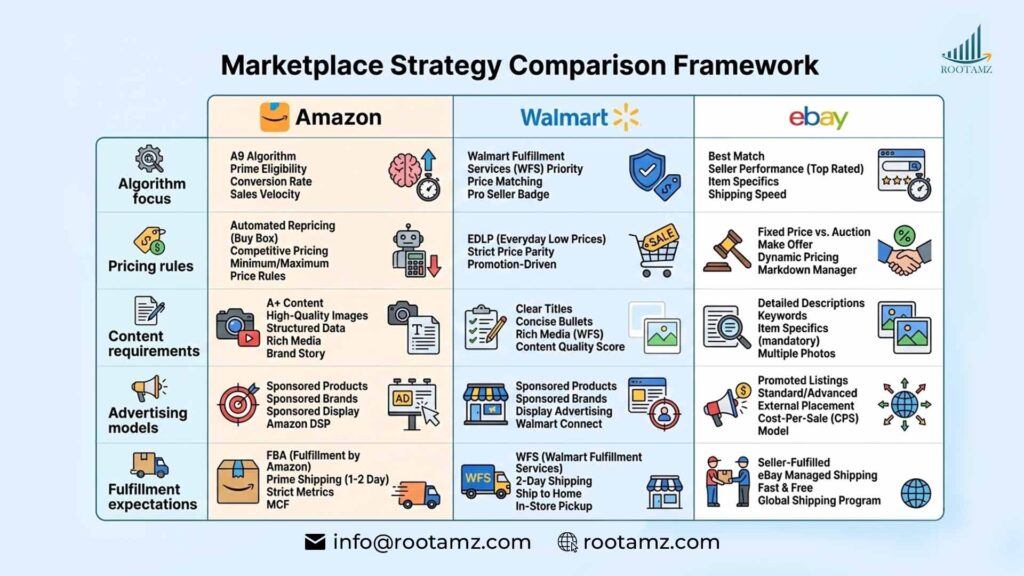
This checklist is divided into four strategic phases, each addressing real-world challenges sellers face.
Phase 1: Days 1-7 – Pre-Launch Foundation (Where 70% of Success Is Decided)
1. Market & Competitor Intelligence
A successful launch begins long before a listing goes live.
At RootAMZ, we conduct:
- Deep competitor ASIN analysis
- Price elasticity checks
- Review gap analysis
- Keyword demand vs competition mapping
- Ad saturation audits
This allows us to position your product where demand already exists, rather than trying to create demand blindly.
RootAMZ Solution:
We build a launch positioning blueprint that defines:
- Ideal launch price
- Primary + secondary keyword clusters
- Content differentiation strategy
2. Keyword Research for 2026 Algorithms
Amazon’s A10/A11 algorithms in 2026 are heavily conversion-driven, but indexing still matters.
We structure keywords into:
- Primary ranking keywords
- Secondary support keywords
- Long-tail conversion keywords
- Backend indexing terms
- PPC-only keywords
Common Seller Mistake:
Using the same keywords everywhere.
RootAMZ Approach:
We deploy keywords strategically across:
- Title
- Bullets
- Description / A+ Content
- Backend fields
- Ad campaigns
3. Listing Architecture & Content Planning
Before uploading anything, RootAMZ designs the listing architecture.
This includes:
- Title structure optimised for mobile + desktop
- Benefit-driven bullet hierarchy
- Objection-handling content strategy
- Image storyboard planning
- A+ Content layout mapping
This prevents rework, delays & suppressed listings.
Phase 2: Days 8-15 – Listing Build & Compliance Readiness
4. Conversion-Optimised Listing Creation
In 2026, traffic without conversion hurts rankings.
RootAMZ builds listings focused on:
- Clear value propositions
- Emotional + logical buying triggers
- Comparison positioning
- Trust-building language
- Category-specific optimisation rules
Every element is built to convert cold traffic.
5. High-Impact Image & Rich Media Strategy
Images are no longer visual support – they are conversion drivers.
RootAMZ ensures:
- Compliance-safe main images
- Benefit-focused infographics
- Lifestyle use-case visuals
- Comparison images (where allowed)
- Video readiness (Amazon + external)
Why This Matters:
Amazon rewards listings that keep shoppers engaged longer.
6. Policy & Compliance Validation
One of the biggest launch killers is policy suppression.
Before launch, RootAMZ audits:
- Category restrictions
- Restricted product flags
- IP risks
- Brand registry alignment
- Image & copy compliance
RootAMZ Advantage:
Our team includes ex-Amazon Account Health & Catalog specialists, ensuring your launch doesn’t trigger avoidable violations.
Phase 3: Days 16-23 – Inventory, Pricing & Ad Launch Preparation
7. Inventory Planning for Launch Velocity
Running out of stock during launch kills momentum.
RootAMZ forecasts:
- Initial launch inventory
- PPC burn rate
- Organic + paid demand curves
- Restock timelines
This avoids:
- Early stockouts
- Overstock cash flow issues
- Ranking resets
8. Smart Launch Pricing Strategy
Cheapest doesn’t win in 2026 – smart pricing does.
RootAMZ builds pricing models that balance:
- Conversion
- Margin protection
- Buy Box eligibility
- Competitor response
We often use:
- Controlled introductory pricing
- Coupon stacking strategies
- Price ladders tied to review growth
9. Advertising Account Structure (Pre-Launch Setup)
Ads should not be built on launch day.
RootAMZ prepares:
- Auto campaigns for keyword discovery
- Manual exact & phrase campaigns
- Defensive brand campaigns
- Competitor targeting
- Sponsored Display groundwork
This ensures data collection begins immediately.
Phase 4: Days 24-30 – Launch Execution & Momentum Building
10. Controlled Launch Day Execution
Launch day is about signal quality, not just sales.
RootAMZ focuses on:
- Conversion rate stability
- Controlled ad spend
- Keyword indexing confirmation
- Listing performance monitoring
We avoid sudden spikes that can trigger:
- Traffic quality flags
- Algorithm confusion
- Inventory stress
11. Review & Trust Signal Acceleration
Reviews still matter – but compliance matters more.
RootAMZ uses:
- Amazon-approved review methods
- Post-purchase experience optimization
- Customer expectation alignment
- Feedback risk monitoring
No black-hat shortcuts. Only sustainable growth.
12. Performance Monitoring & Optimisation
After launch, RootAMZ tracks:
- Keyword ranking movement
- Ad performance efficiency
- Conversion rate by traffic source
- Inventory sell-through
- Buy Box stability
This data feeds directly into:
- Bid adjustments
- Content optimisation
- Scaling decisions
How RootAMZ Ensures Long-Term Success After Launch
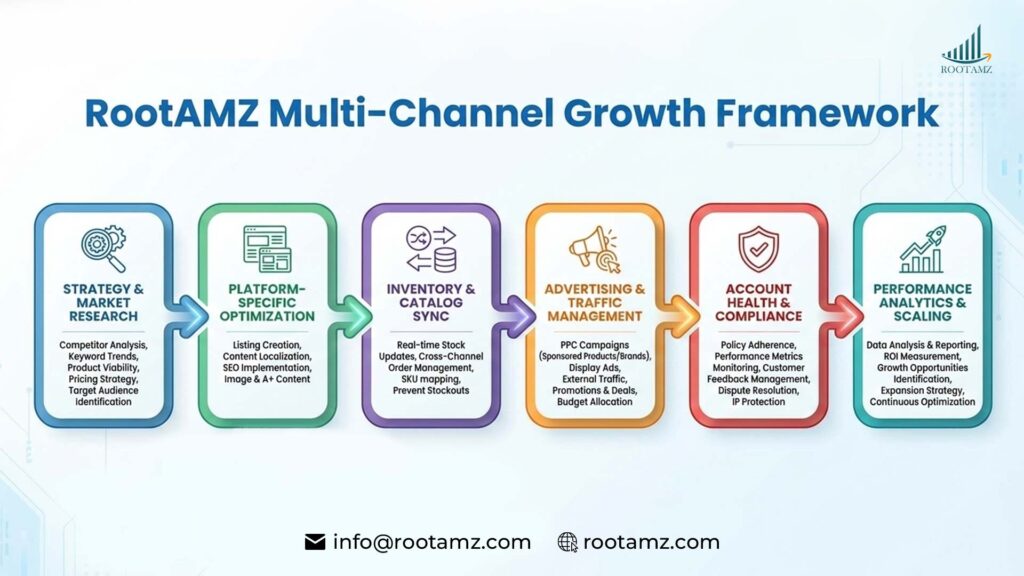
A product launch is not the finish line – it’s the foundation.
RootAMZ supports sellers with:
- Ongoing PPC optimisation
- Listing A/B testing
- Expansion keyword targeting
- International marketplace readiness
- Account health monitoring
As an Amazon Ads Verified Partner, RootAMZ aligns advertising strategy with platform-approved best practices, ensuring scalable & compliant growth.
Why Sellers Choose RootAMZ for Amazon Product Launches
- End-to-end launch ownership
- Ex-Amazon specialists on the team
- Proven multi-category experience
- Data-first execution
- Compliance-focused scaling
- Long-term growth mindset
We don’t chase short-term wins – we build durable Amazon businesses.
Final Word
Launch with Confidence Not Guesswork
In 2026, Amazon rewards sellers who launch with:
- Preparation
- Precision
- Patience
- Professional execution
If you’re planning a new product launch or relaunch, don’t risk trial-and-error.
📩 Reach out to the RootAMZ team to build a launch roadmap tailored to your product, category & growth goals
✅ Ready to scale your brand with a winning multi-channel strategy in 2026?
FAQ’s
Do I need ads to launch a product in 2026?
Yes. Organic growth alone is extremely difficult. Ads help generate the early conversion signals Amazon’s algorithm needs.
Can I relaunch an existing underperforming product?
Absolutely. RootAMZ specialises in product relaunch strategies using updated content, ads, pricing & keyword structures.
What inventory quantity is ideal for launch?
This depends on category, price & ad strategy. RootAMZ builds custom inventory forecasts to avoid stockouts or overstocking.
Why should I use an Amazon Ads Verified Partner like RootAMZ?
Verified Partners have proven expertise, platform alignment & access to best-practice frameworks that reduce risk & improve ROI.